

How to care for a wooden bowl.
Wash it by hand, dry it right away and oil it when it looks thirsty. Everything else is below.
Every day.
Wash it by hand
Warm water and a little mild dish soap, then rinse. Don’t leave it to soak: too much water can warp or crack wood over time.
Dry it right away
Towel it dry, then let it finish air-drying on a rack or standing on its edge, so no water sits in it.
Oil it when it looks dry
When the wood looks pale or feels dry, rub in a little food-grade mineral oil or board butter, leave it a few minutes and wipe off the rest. About once a month is plenty for a bowl in use.
Keep it out of the sun & heat
Sunlight bleaches wood and heat dries it too fast, which is how cracks start. Milo fades faster than most.
What to avoid.
Heat and water make wood swell, then shrink fast. That’s how bowls warp and crack.
Leaving a bowl in the sink or a tub of water lets moisture work into the wood and split it over time.
Direct heat dries the wood too quickly and can crack it.
They can go sticky and rancid and leave an off smell. Use mineral oil or board butter.
It carries ingredients that shouldn’t touch food. Use a product labeled food grade or food safe.
Cold-pressed nut oils can carry nut protein. If anyone at the table has a nut allergy, stick to mineral oil.
Which oil to use.
Food-grade mineral oil, sold as white mineral oil, is cleared by the FDA for use in food, stays liquid and doesn’t go rancid. A board butter, mineral oil thickened with beeswax, does the same job and leaves a soft sheen.
Drying oils such as tung and linseed soak in and harden, and are allowed in food-contact finishes, but a freshly oiled piece needs several weeks to cure before it touches food. For a bowl you use every day, mineral oil is the simple choice.
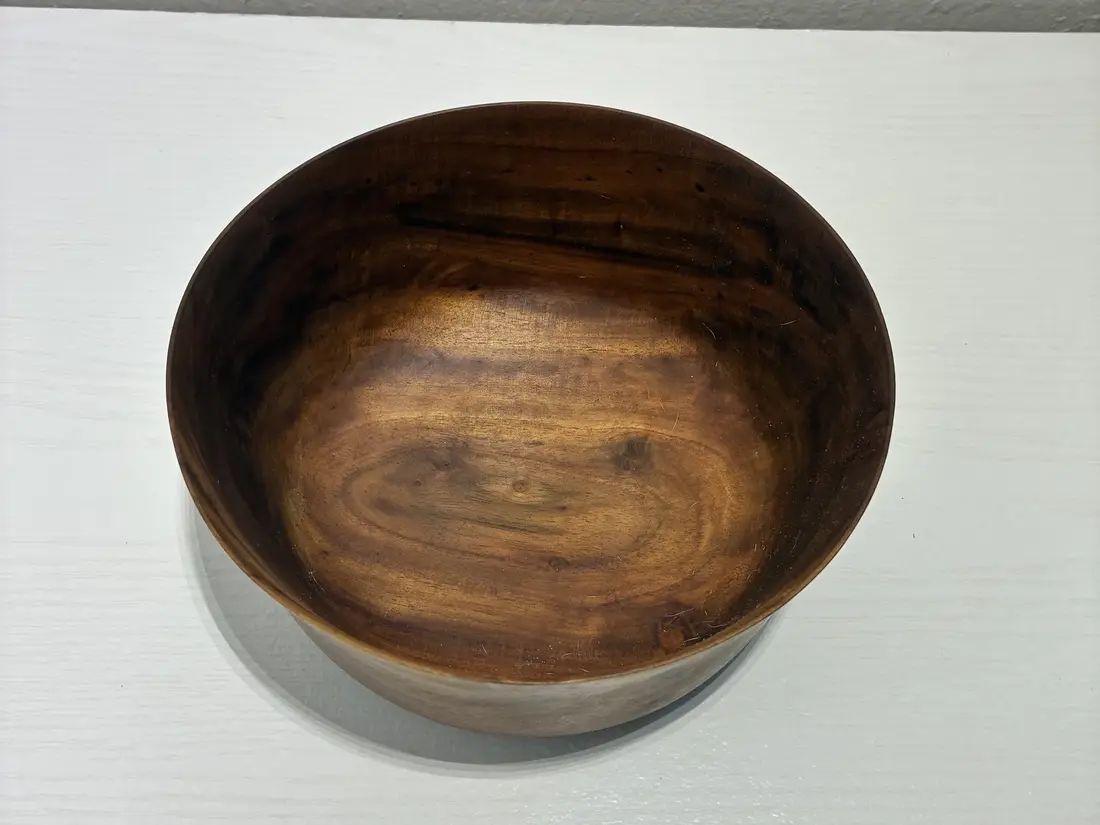
Fixing a tired bowl.
Dry, pale or dull
It needs oil. Rub in a generous coat, leave it overnight and wipe off what hasn’t soaked in. A mineral oil finish can be renewed as often as you like.
Rough after washing
Water has raised the grain. Once it’s fully dry, a light rub with very fine sandpaper and a fresh coat of oil brings the surface back.
A little oval
Wood moves with the humidity. A bowl turned round in Kāneʻohe can be a hair oval in a dry winter somewhere else. That’s wood being wood, not a fault.
A crack
A hairline check can appear in very dry air. If a crack is deep enough to hold food and can’t be cleaned, keep the bowl for fruit, bread or display. Or ask Kaleb to look at it.
Questions about wooden bowls.
Not answered here? Call or text Kaleb on (808) 729-1560, or write to him.
Can wooden bowls go in the dishwasher?
Best not. Hot water and fast drying make wood swell and then shrink, which is how bowls warp and crack. Some food-safety guidance allows solid-wood boards in the dishwasher, but a turned bowl lasts far longer washed by hand.
What oil is safe for a wooden bowl?
Food-grade mineral oil, or a board butter of mineral oil and beeswax. Avoid baby oil, which has ingredients that shouldn’t touch food, and look for “food grade” or “food safe” on the label.
How often should I oil a wooden bowl?
About once a month for a bowl in regular use, or whenever the wood looks pale and dry.
Can I use olive oil on a wooden bowl?
It’s better not to. Olive and other vegetable oils can turn sticky and rancid over time and leave an off smell or taste.
Is wood antibacterial?
Nobody should promise that. The US Forest Products Laboratory says wood tends to be less prone to harbor bacteria than some materials, such as plastic. Wash it well and dry it well and it’s a good surface for food.
What should I do if my bowl cracks?
A hairline check can appear when the air gets very dry. If a crack is deep enough to hold food and can’t be cleaned, keep the bowl for dry things or display. Or ask Kaleb to look at it.
Sources: University of Maine Cooperative Extension, Bulletin 3108; USDA Forest Products Laboratory on finishes for wooden utensils; 21 CFR 172.878, white mineral oil; National Park Service Museum Handbook on wood; Children’s Hospital of Philadelphia on nut oils.
Bowls made to be used.
Every piece in the shop is turned from an Oʻahu tree and finished with food-safe oil.